

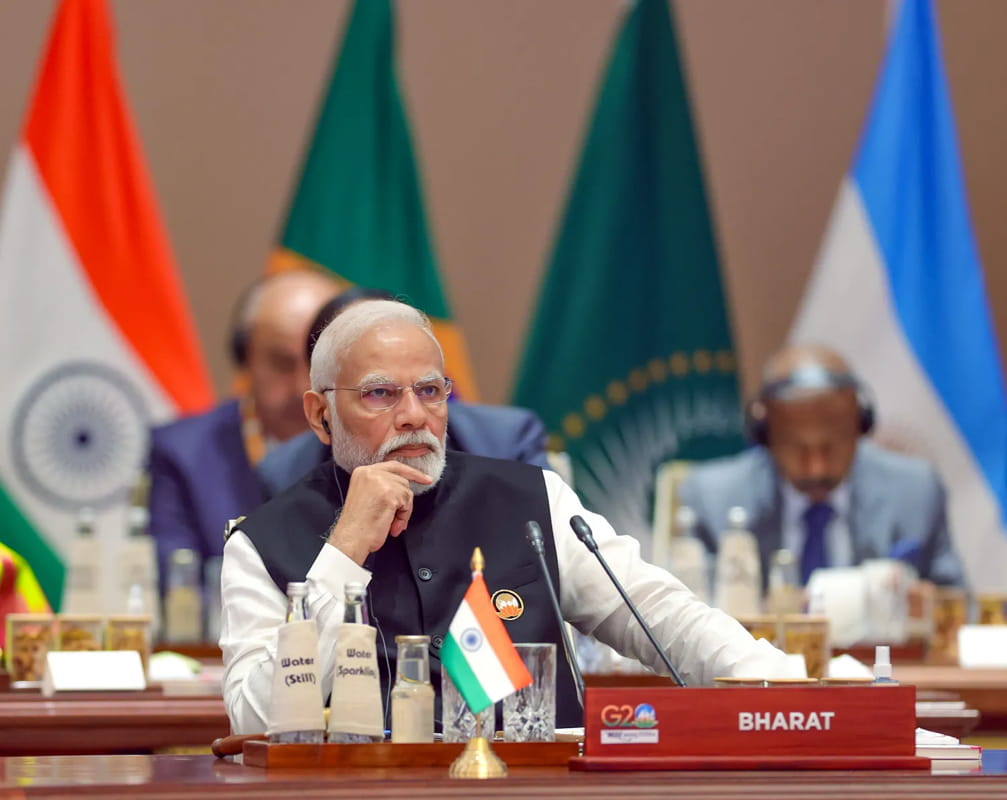
Indian Prime Minister Narendra Modi at the G20 Leaders' Summit in New Delhi on September 9, 2023. | PTI.
Introduction
The world today is characterised by deep uncertainty and fragmentation. Old alliances are fraying, at the very moment new conflicts are erupting; global governance is weakest precisely when cooperation is most needed. A multipolar world order is seeing the United States voluntarily cede space with its ‘America First’ doctrine. The institutions built in the aftermath of the Second World War, such as the United Nations and the Bretton Woods institutions such as the International Monetary Fund, and the World Bank, are struggling to respond to the ‘polycrisis’ the world faces today.
Since the Industrial Revolution, technology has been the key driver of progress as technological breakthroughs, from the spinning jenny and power loom to steam engines and the railways, have fundamentally reshaped production, societies, and global power structures. Today, we are well into Industry 4.0 and looking towards Industry 5.0, with technologies such as artificial intelligence (AI), quantum computing, semiconductors, and clean technologies changing the way we live and work. As before, control of these technologies is a geopolitical tug-of-war, with countries pouring billions of dollars into securing technological sovereignty.
Adding to these uncertainties is the looming and ominous threat of climate change. Despite the Conference of the Parties (COP) 30 in Brazil agreeing to triple climate finance levels, the world remains well short of limiting warming to 2.0 degrees Celsius above pre-industrial levels, let alone 1.5 degrees. Yet, clean technology supply chains remain dominated by a few countries. China alone accounts for 80% of global critical minerals processing and solar cell manufacturing, and approximately 70% of battery manufacturing. Control over these technologies, and the supply chains that underpin them, threatens to jeopardise the clean energy transition.
Why India Needs Strategic Autonomy?
A decade ago, India was counted among the “Fragile Five” economies, a term referring to countries with shaky macroeconomic fundamentals. Today, India is the world’s fastest-growing large economy and an oasis of stability amidst global turbulence. On the back of inclusive economic growth, advancements in digital public infrastructure, climate action, and the foregrounding of the interests of the Global South, India has re-emerged as a central actor in the global order. India is bridging the interests of the Global North and South, positioning itself as a reliable and trusted partner to both the developed and developing world.
As the world becomes more unpredictable, the need for a doctrine that preserves India’s sovereign decision-making while enabling it to pursue ambitious economic and technological goals is more urgent than ever. Historically, India has always sought to maintain our autonomy in foreign relations. As a founding member of the Non-Aligned Movement (NAM), India, along with countries such as Egypt and Yugoslavia, sought to preserve the independence and sovereignty of newly independent nations during the Cold War era.
The idea behind the NAM was not to take sides and get drawn into various blocs. Indeed, ‘strategic autonomy’ was embedded in the NAM. Yet, we are now taking it further.
Strategic autonomy is our capacity to make decisions that advance our interests while building deep and diverse partnerships, without allowing any single nation or bloc to influence or dictate our economic, technological, or geopolitical interests.
The present global environment renders strategic autonomy not merely desirable, but essential. Strategic autonomy spans the economic, energy, technological, and geopolitical domains. Economic autonomy requires stable trade relationships, a competitive manufacturing sector, and resilient supply chains. In a world where tariffs are being weaponised and export controls are restricting trade, economic autonomy gains prominence.
Technological autonomy is equally indispensable. Artificial intelligence, semiconductors, quantum computing, and critical minerals now underpin national security, productivity, and global competitiveness. Building capacity in these frontier domains is essential not for isolation, but to ensure that India does not become a technological colony of the West or China.
Energy autonomy has broadened in scope, extending beyond oil to include solar cells, batteries, critical minerals, and electrolysers. Compared to being non-aligned, strategic autonomy is no longer about being unaligned. It is about freedom and the capability to craft an independent path, while collaborating globally to advance our national capability.
What Strategic Autonomy is Not
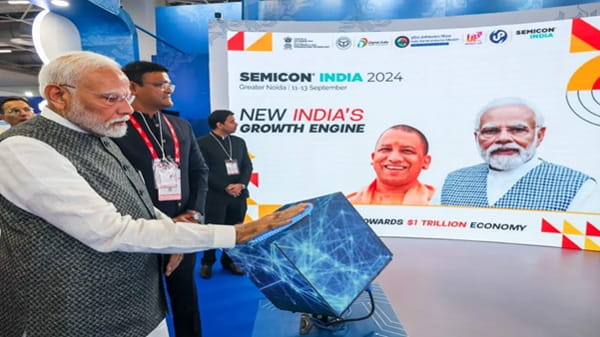
Indian Prime Minister Narendra Modi inaugurates the SEMICON India 2024 in Greater Noida on September 11, 2024. Mid-day.
At the same time, it is essential to understand what strategic autonomy is not. First, strategic autonomy is not about isolationism. India’s growth, technological progress, and global leadership all depend on international engagement. Our vision to integrate ourselves into global value chains, compete in new markets, and forge a new path for global governance will not be achieved through isolationism. Strategic autonomy is also not about neutrality.
During India’s G20 Presidency, Prime Minister Narendra Modi convened the Voice of the Global South Summit for a reason. Our promise to the countries of the Global South was that during India’s G20 Presidency, we would amplify their voice and bring their concerns to the forefront of global governance. And so, we delivered, most emphatically, with the inclusion of the African Union as the 21st Member of the G20.
Even during climate negotiations at COP, India has consistently taken clear positions, negotiating purposefully to ensure that the developed world meets its obligations on climate finance and technology transfer. Neither is strategic autonomy an avatar of the non-aligned movement. India works closely with a range of partners, from the United States to Russia, Japan to China, and Africa to Europe. Pursuing strategic autonomy allows India to pursue these multiple relationships. At the core of strategic autonomy lies cooperation, allowing India to form effective, mutually beneficial partnerships.
Strategic autonomy has enabled India's stability. For instance, in 2022, at the height of the Russia–Ukraine war, India took independent decisions on energy security, preventing a more profound and prolonged energy price shock. This not only stabilised global markets but also helped rein in inflation massively. Similarly, our leadership in digital public infrastructure (DPI), with open source and interoperability at its core, offers an alternative to the proprietary, concentrated digital architectures of the West.
Through its G20 Presidency, India committed to sharing DPI with the developing world, advancing a vision of digital inclusion that strengthens global resilience. India’s pursuit of strategic autonomy carries significance well beyond its national borders. In an era of competing technological blocs, fragmented supply chains, and climate stress, a confident and autonomous India contributes to global public goods, amplifies the voice of the Global South, and expands the range of solutions available to the world.
In this world of volatility, a country of India’s size and ambition must retain the ability to pursue growth, secure technology, and navigate geopolitical fault lines on its own terms. Strategic autonomy provides the framework for doing so.
Our strategic autonomy is, therefore, not a defensive posture inherited from a previous era. It is the doctrine of a confident nation that seeks to shape, rather than merely navigate, the emerging world order.
As global uncertainties deepen, from technology bifurcation and supply-chain weaponisation to climate stress and institutional fragility, India’s ability to take independent, interest-driven decisions will be central to its economic rise and geopolitical influence. Strategic autonomy enables India to remain a bridge between competing blocs, a stabilising force in a fractured world, and a credible voice for the Global South. It allows India to pursue partnerships without dependence, competition without hostility, and global integration without compromising sovereignty.
Conclusion
Far from being outdated, the term “strategic autonomy” captures the essence of India’s contemporary foreign policy: a commitment to sovereign decision-making, global cooperation, and national capability-building. As India moves towards its long-term goal of becoming a Viksit Bharat, strategic autonomy must remain the bedrock of its engagement with the world.
(Exclusive to NatStrat)
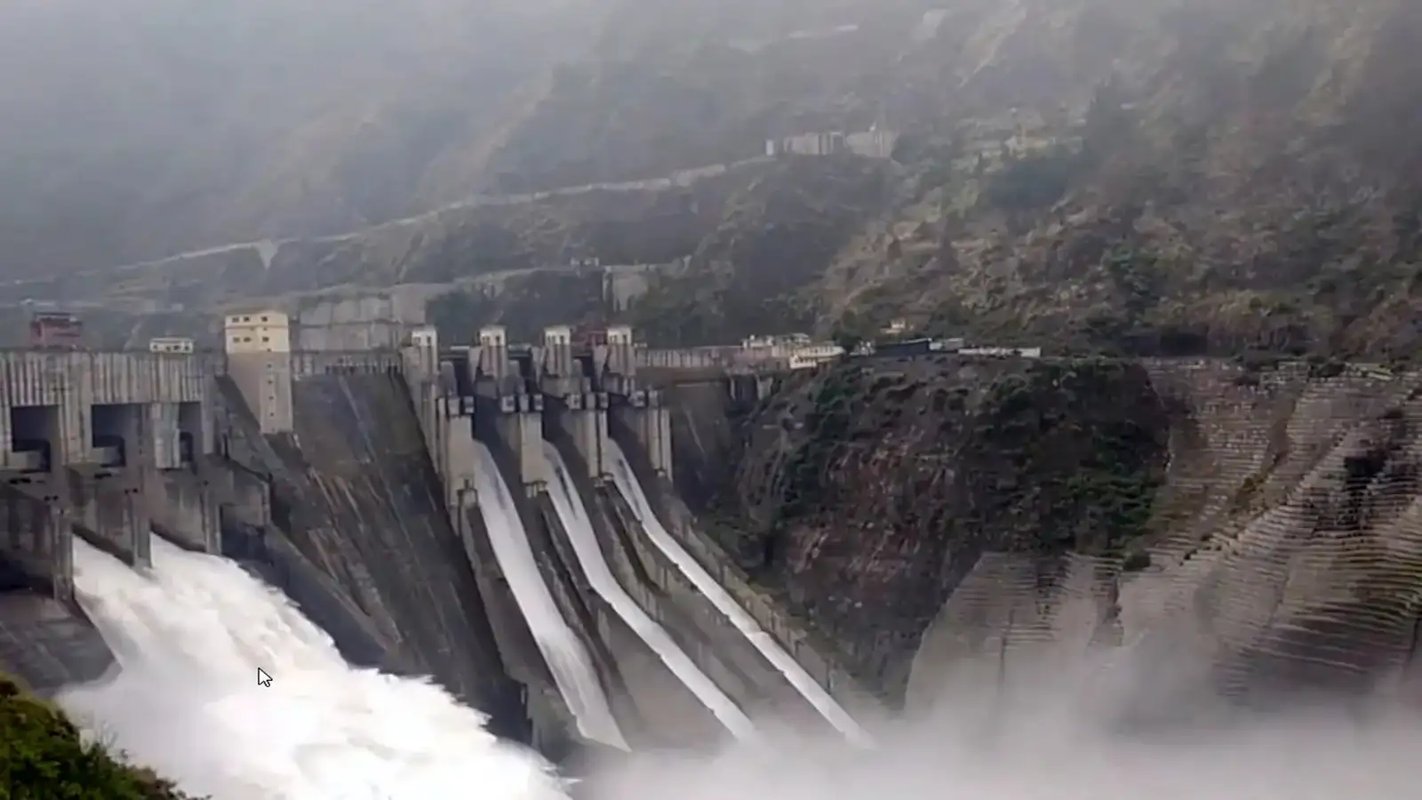
Separating Reality from the Rhetoric: Facts, Fiction, and the Indus Waters Treaty