

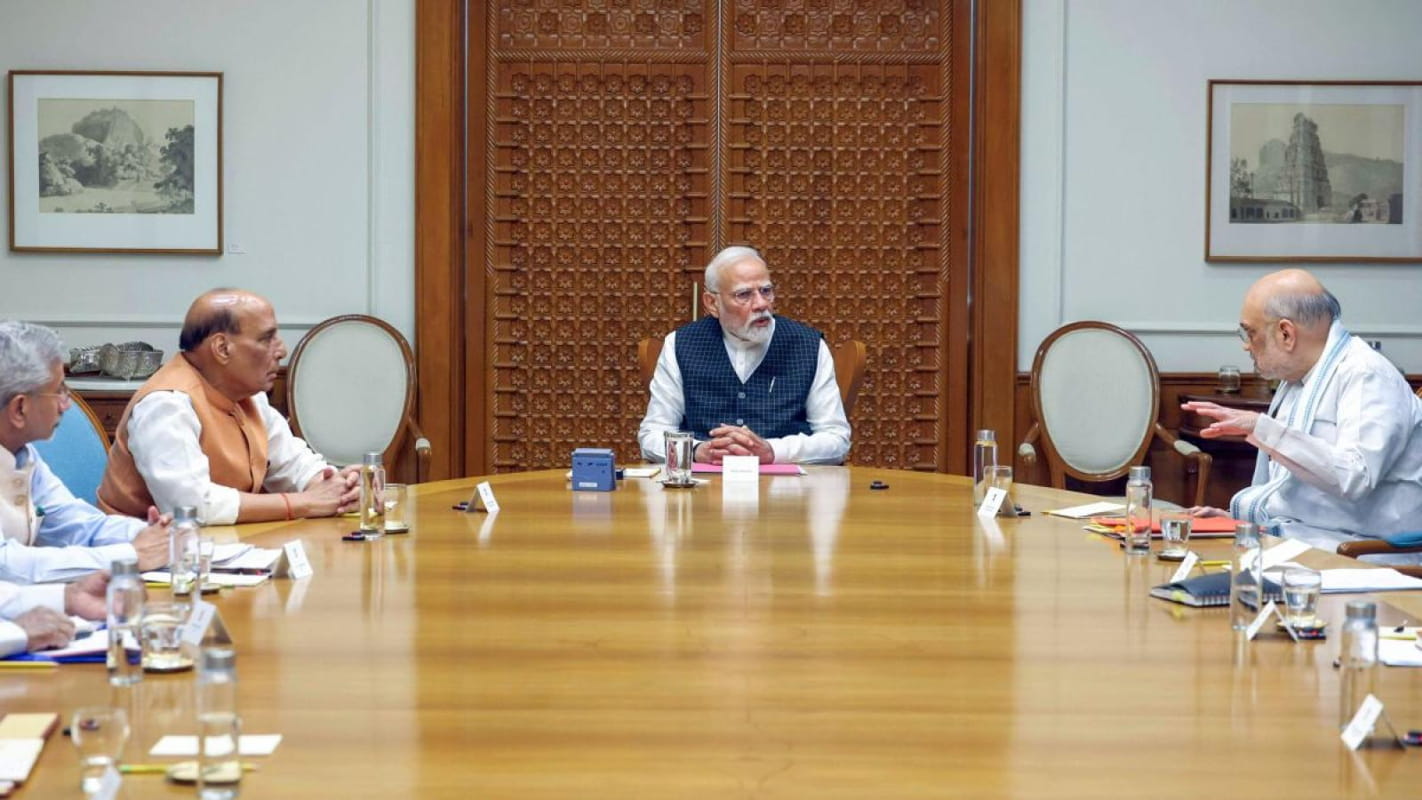
Indian Prime Minister Narendra Modi chairs a meeting of the Cabinet Committee on Security in New Delhi on April 23, 2025. | ANI

It is easy to articulate strategic autonomy as a slogan; it is far more important to chart a pathway for its implementation in practice, for, in this troubled world, for India to achieve its destined status as a great power, there is no substitute to embracing strategic autonomy as a genuine national policy and strive for its full implementation. No country has ever risen to great power status if it has not mastered the sinews of war and peace, in other words, strategic autonomy.
Introduction
In Indian foreign policy, the term strategic autonomy is of a more recent vintage. The key question during the Cold War was whether India would align itself with one of the two blocs. Non-alignment was the answer: both as a national policy and as a movement. Non-alignment had its critics-both during the Cold War and after - but its centrality as an organising principle for India’s foreign policy during that period was not disputed.
On the key question during the past three decades of the post-Cold War period, one of US primacy and its domination of globalisation, Indian foreign policy found it difficult to settle on a single organising principle - veering from Non-Alignment 2.0 to multi-alignment, rules-based international order to multipolarity or some combination of other passing fads. The drift reflected the inherent ambiguity in India’s self-perception of where it stood in a changing global order.
During the heydays of globalisation - the first two decades of this century - strategic autonomy was frowned upon, as an archaic concept that prevented India from securing the benefits of US-led globalisation. The latter’s fragmentation after the 2008 financial crisis, the rise of protectionism in trade and technology relations and the advent of sanctions as an instrument of pressure on India emanating from conflicts of the West with Iran, Venezuela and now Russia tilted the balance in Indian foreign policy thinking away from a more romantic vision of the benefits of global engagement.
If there were any doubts, these were set aside by India becoming the target of US pressure under the Trump Administration. After meandering for a while, India seemed to have now settled with strategic autonomy as an anchor, if not the most important characteristic of Indian foreign policy. However, its meaning remains vague; its context varied and it is often used for multiple and sometimes contradictory purposes.
Working Definition
This article intends to unpack the meaning of strategic autonomy through delineating its four dimensions: declaratory, operational, economic/technological, and societal. It is, however, necessary to first start with a working definition to set out the parameters, since strategic autonomy is often used as a synonym for an independent foreign policy or for Make-in-India or Atmanirbharta or even as justification for multi-alignment or the pursuit of multi-polarity. This is partly due to the general nature of the term, but more importantly due to the fact that it is often used for multiple purposes, such as to generalise a specific problem, to obfuscate a policy decision or very often as a convenient tool to avoid difficult options. As a slogan, it is difficult to argue against as it has a ‘motherhood-and-apple pie’ quality about it, but as a national objective to be achieved in specific terms and targets, its complexities come to the fore.
A working definition of strategic autonomy must first pay attention to its first phrase, ‘strategic,’ for it is here that the main source of confusion arises. While in common usage ‘strategic’ is anything that is central, critical, or long-term, in the realm of strategic studies ‘strategic’ implies the study of the use of armed force for national security objectives, through finding a balance between ends and means.
Hence, a working definition of strategic autonomy could be ‘the will and capacity to think and act independently on matters of war and peace that affect the vital interests of the country.’ Seen from this standpoint, strategic autonomy is but a subset of an independent foreign policy, not co-terminus with it, even as one is a necessary condition for the fulfilment of the other.
In terms of scope, strategic autonomy focuses mainly but not exclusively on the country’s ability and willingness to engage in the use of armed force to secure its national interests without being unduly constrained by externally determined factors. In terms of national objectives, strategic autonomy is both a policy prescription and a pathway to prioritise, mobilise, and channelise national resources to fulfil long-term objectives that impinge on its national security interests.
In other words, strategic autonomy is both the process as well as the end point of how India wishes to secure its national security interests that involve the use of armed force for objectives that are nationally determined and through resources that are nationally mobilised. In the international context, a key question for assessing strategic autonomy is: where does engagement create dependencies that, in turn, slip into vulnerabilities that impede the country’s willingness and capability to use force independently? Strategic autonomy ceases to be autonomous when that red line is crossed.
Declaratory Dimension
In recent years, strategic autonomy has been referred to both as a characteristic and objective of India’s foreign policy. The context is often to assert India’s independent view on a contentious global issue.
However, contradictions tend to appear when strategic autonomy is juxtaposed with multi-alignment or with our adherence to a rule-based international order, when in fact many of the challenges to India’s autonomy arise from that very order, as in the case of the imposition of secondary sanctions related to the Ukraine conflict.
This concept is also mentioned as an objective of national policies such as Make-in-India (Atmanirbharta) or technological sovereignty. The pursuit of multipolarity in forums such as the G20 or BRICS is projected as a means to strengthen India’s options in pursuit of strategic autonomy. While the declaratory dimension is often a function of Indian diplomacy - with all its contradictions - the essence of strategic autonomy lies in its operational dimension, which pertains to India’s armed forces.
Operational Dimension
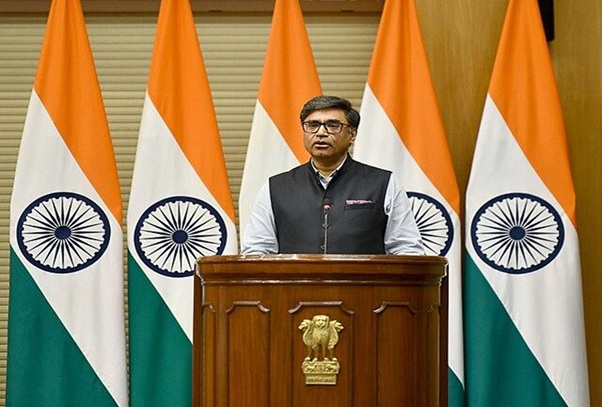
Indian Foreign Secretary, Vikram Misri briefing the media on ‘Operation Sindoor’, in New Delhi on May 10, 2025. | PIB.
Defining the aims of war and the terms under which war is terminated is perhaps the most important attribute of sovereignty, for there is no other state function that defines the independence of decision making as issues of war and peace. On numerous occasions, the Indian state has demonstrated substantive independence of decision-making, the most recent example being Operation Sindoor.
Prior to the launch of Operation Sindoor, India had declared that it reserved the right to use armed force against the perpetrators and sponsors of terrorist attacks across the border, even if it was within the nuclear overhang.
With changing geopolitical conditions, India’s ability to respond to China’s growing asymmetric power and its linkages with Pakistan (and perhaps even Bangladesh) will be severely tested. India will have to come up with an updated military doctrine that ensures it is capable of defending India’s national security interests based on its national resources - broadly defined to mean military force and the supporting industrial, economic and technological base, with external support only supplementing operational capabilities but not controlling them.
In operational terms, India’s military doctrine would be constrained either if its military capacities are critically linked to unreliable external supplies even for a short-duration conflict, or its military equipment has external linkages in the name of interoperability that do not preclude a ‘kill switch’, or the Indian armed forces have external commitments that inhibit their unfettered use for the purposes of India’s own national security.
This latter divergence could well occur if there is a large gap between the maritime and continental aspects of India’s security. The ability of the Armed Forces to execute a military doctrine, even under unfavourable external circumstances, would be high only if there is clarity of thought, forward planning, and the marshalling of limited resources through jointness and doctrinal integration.
A good military doctrine for India should presume that the available external diplomatic options will be limited. This would reinforce the national will to deal with a huge asymmetry in power with China, largely through our own resources. This focus was somewhat blurred till now, as there were unreal expectations of the availability of external balancing through mechanisms such as the Quad. With the future of the Quad uncertain, it would be imprudent for our Armed Forces to rely on its deterrent potential against China. At the same time, the elevation of Pakistan in the US CENTCOM strategy is an ominous development.
Economic/Technological Dimension
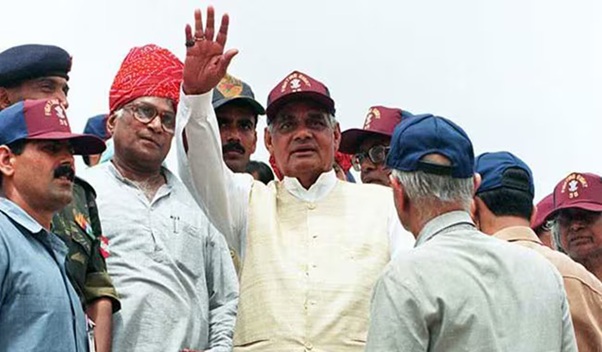
Indian Prime Minister Atal Bihari Vajpayee at the Pokhran Test Range after the nuclear tests were successfully conducted in 1998. | NDTV.
Given the changing nature of warfare, the economic and technological dimensions of national power assume increasing importance. The availability of financial resources for defence is dependent on the growth of the economy, but what is equally important is their utilisation in accordance with the military doctrine commensurate with the threat scenario. There is a case to be made for raising the share of defence spending to up to 3% of GDP, but there is equally a case to be made that such increases should spur military modernisation rather than be a case of throwing good money after bad.
There has been a welcome emphasis on Make-in-India or Atmanirbharta programmes, including participation of the private sector, with a steady increase in indigenous production becoming the mainstay of procurement for our Armed Forces. However, finding the right balance between indigenous production and doctrinal requirements will not be easy.
On the battlefield, it does not matter how India acquired the firepower as long as it is effective and sustainable. Any critical gap on the battlefront will derail strategic autonomy, however well-intentioned the efforts towards indigenisation are.
With regard to technological developments, India’s slow, and until now, underfunded R&D effort poses a particular challenge in balancing external procurement and the cost of strategic autonomy, especially with regard to critical inputs such as space surveillance, aircraft engine transfers, shared data centres, cloud services or cyberspace. All of these create long-term dependencies, with hidden vulnerabilities that could potentially paralyse national security responses to external threats.
The key question for the operational dimension of our military doctrine is to define the line where dependencies slip into vulnerabilities, thereby undercutting capacities for the exercise of strategic autonomy. The opening up of the defence sector to private industry and foreign investors is both an opportunity for growth but also a risk of increased dependency that undercuts the primacy that the Indian armed forces ought to enjoy with respect to defence manufacturing in the country.
With NATO countries increasing their defence production by over US $1.5 trillion and over $5 trillion investments expected in the AI and semiconductor industry, Indian domestic capacities in both the defence and high-tech fields run the risk of getting sucked into external priorities, drowning domestic ones. A similar challenge might also arise with respect to unregulated defence exports.
In the case of strategic minerals, India faces a tough choice of engagement with the US and Chinese-led supply chains, with their inherent opportunities and risks for our strategic autonomy. There are no easy answers, but sustained development of indigenous capabilities will ameliorate the situation in the medium term.
If Indian companies and Global Capability Centres use India as only one part of the global supply chain, this will, over time, erode our strategic autonomy, for there would be several international claimants to India’s domestic capabilities. India’s vulnerabilities to pressure on its markets for textiles, diamonds and marine products, as well as procurement of concessional crude supplies from Russia, were recently in evidence.
While India would like to work with the West on resilient supply chains and is keen to enter into FTAs with the advanced economies, we were compelled to give in to pressure on our resilient supply chains in energy from Russia. Unless addressed, such vulnerabilities will naturally erode the material basis for our strategic autonomy in the future.
Societal Dimension
Usually neglected, the societal dimension assumes importance given that India is a growing economy with a young demographic profile whose aspirations guide national goals. The nature of India’s growth has been such that a growing middle class in urban settings has been a big beneficiary of India’s global engagement, especially in the high-tech sectors. They view with deep concern the new pressure points that have emerged in our relations with the West, such as rising racism and restrictive visa practices.
Despite this, the Indian middle-class aspirations are as much global as they are local, and they see no contradiction between the two. However, the loss of young talent abroad will inevitably have a slowing-down effect on the development of India’s own national capabilities. There is a huge interest among the youth in joining the Agniveer programme which is yet to fully mature to cater to future battlefield requirements.
The Indian secondary education system is not yet fully geared to provide tech-savvy recruits for the Indian armed forces. A national reticence on conflict may also impact the strengthening of strategic autonomy, as influential sections in society may be reluctant to make sacrifices for future gain. This is also reflected in the broadly optimistic outlook of the think-tank community with regard to India’s external engagement.
Conclusion
Strategic autonomy is both an aspirational concept as well as an operational objective. Its four dimensions are mutually reinforcing, though the yardstick of success lies in its operational dimension, without which the other three would fade into insignificance.
It is easy to articulate strategic autonomy as a slogan; it is far more important to chart a pathway for its implementation in practice, for, in this troubled world, for India to achieve its destined status as a great power, there is no substitute for embracing strategic autonomy as a genuine national policy and striving for its full implementation. No country has ever risen to great power status if it has not mastered the sinews of war and peace, in other words, strategic autonomy.
(Exclusive to NatStrat)
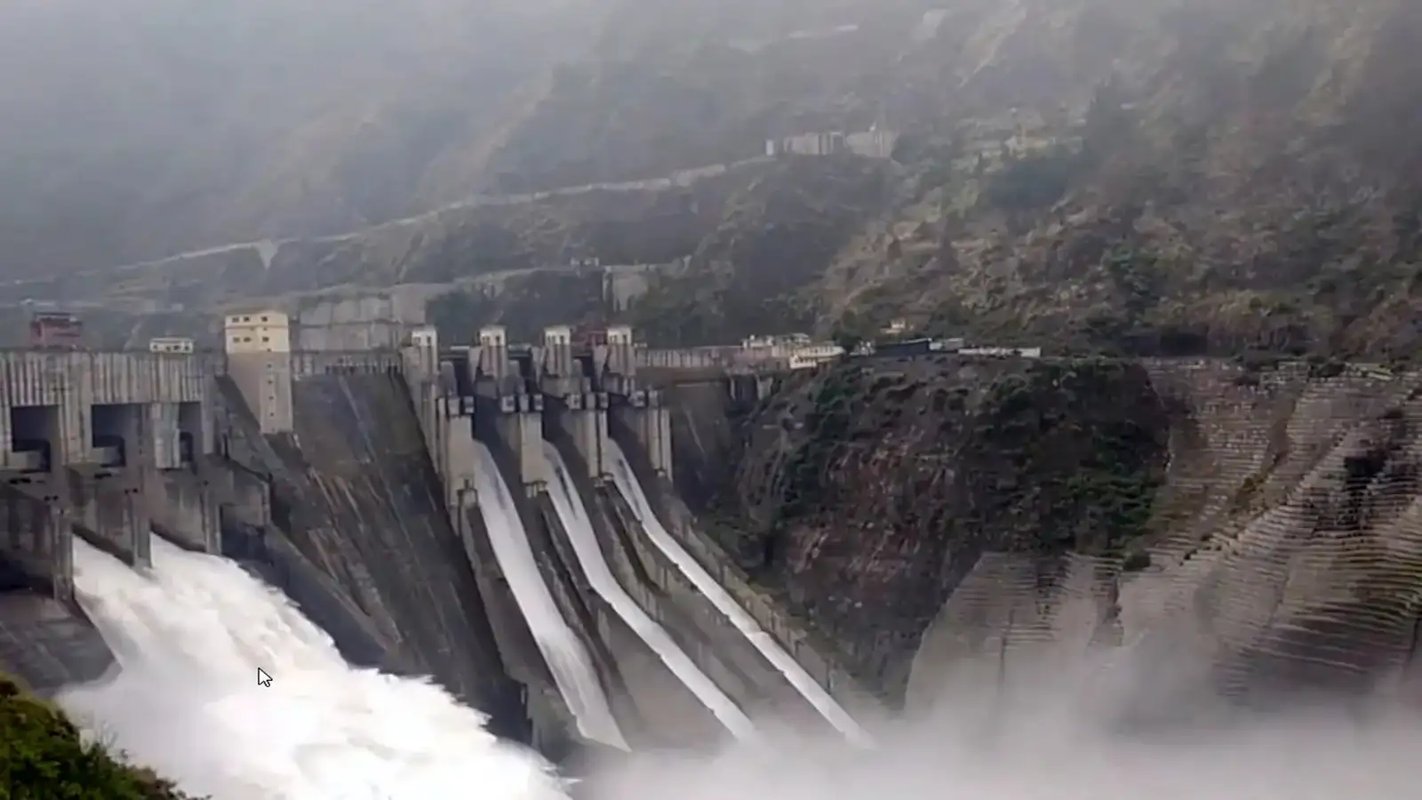
Separating Reality from the Rhetoric: Facts, Fiction, and the Indus Waters Treaty